If you are a Sri Lankan entrepreneur who owns a US LLC, staying compliant with annual filing requirements is just as important as forming the company itself. Missing a deadline or failing to submit the required forms can lead to costly penalties, loss of good standing, and unnecessary stress. The rules can seem confusing, especially for non-resident business owners who are managing their companies from overseas.
In this guide we explain everything you need to know about US LLC annual compliance in 2026, including IRS filing requirements, state obligations, deadlines, fees, and common mistakes to avoid. Read on to learn how to keep your US LLC compliant and running smoothly throughout the year.
What is US LLC Annual Compliance?
When you form a US LLC, the work does not stop at registration. Every year, your LLC must meet a set of legal and tax obligations to stay active and in good standing with both the state it is registered in and the US federal government. This is what annual compliance means: the yearly filings, reports, and fees your LLC must complete to remain a legitimate, operating business.
The part that surprises most non-resident founders is that these obligations do not pause just because your LLC made no money. The IRS, your state, and other federal agencies do not track your revenue before sending requirements.
If your LLC exists, it is expected to file. A zero-income LLC still needs to submit certain IRS forms, renew its registered agent, and file state reports. Missing any of these triggers penalties and late fees regardless of profit.
Here is how annual compliance works differently depending on where you live:
| Obligation | US Resident Owner | Non-Resident (Sri Lankan) Owner |
| Federal tax return | Standard 1040 | Form 5472 + pro forma 1120 |
| State annual report | Required | Required |
| BOI Report (FinCEN) | Exempt (as of March 2025) | Exempt (as of March 2025) |
| BEA Survey (BE-13/15) | Rarely applies | Applies from day one |
| ITIN requirement | Not needed (has SSN) | Needed if no SSN |
| Tax treaty benefits | Not applicable | May apply under Sri Lanka–US rules |
As a Sri Lankan owner, you are operating under an extra layer of federal reporting that US residents simply do not face. Missing any one of these is enough to trigger serious penalties.
Why Annual Compliance Matters for Sri Lankan LLC Owners
Most Sri Lankan founders only think about compliance after something goes wrong. Here is why you cannot afford to wait:
- Heavy IRS penalties: Missing Form 5472 alone starts at a $25,000 fine, even with zero income
- Loss of good standing: Your LLC can be marked inactive or dissolved by the state, cutting off your ability to operate legally
- Frozen payment accounts: Stripe, Payoneer, and similar platforms verify business standing. A lapsed LLC can get accounts suspended
- Personal liability exposure: When an LLC falls out of compliance, the legal wall between your personal assets and business debts can break down
- Bank account complications: US banks can flag or close accounts tied to non-compliant LLCs
- Backdated penalties stack up: Compliance penalties compound over time. One missed year can turn into thousands of dollars owed by the time you notice
Types of Annual Compliance You Have to Handle as a Non-Resident LLC Owner From Sri Lanka
Running a US LLC from Sri Lanka means you are dealing with more than one agency and more than one set of rules. Your obligations sit across four levels: the IRS at the federal tax level, your formation state, FinCEN, and the Bureau of Economic Analysis.
Here is what each one requires from you:
1. Federal Tax Filings (IRS)
The IRS is the first place most founders think about when it comes to compliance, and for good reason. As a foreign owner of a US LLC, you have specific federal filing requirements that go beyond what a US resident would handle.
a. Form 5472: The Most Critical Filing for Foreign-Owned LLCs
Form 5472 is the single most important filing you need to know about as a Sri Lankan LLC owner. If you own a single-member LLC that is treated as a disregarded entity, the IRS requires you to file Form 5472 every year to report transactions between you and your LLC. This includes capital contributions, loans, payments for services, and any money moving between you and the business.
What catches most people off guard is that this filing is required even if your LLC had no income during the year. As long as there were any reportable transactions, which includes even putting your own money into the company, Form 5472 must be filed. The deadline is April 15 each year, and the penalty for missing it starts at $25,000 per form. This initial penalty applies automatically. Receiving an IRS notice does not reduce it.
If the failure continues for more than 90 days after an IRS notice, an additional $25,000 penalty applies for each subsequent 30-day period, so unresolved filings compound quickly.
b. Form 1120 (Pro Forma): Filed Together with Form 5472
Form 5472 cannot be submitted on its own. The IRS requires it to be attached to a pro forma Form 1120, which is the standard US corporation income tax return. In this case it is not a full tax return. It acts as a cover page that gives the IRS the basic details of your LLC, such as its name, EIN, and address.
Even though your LLC is a disregarded entity and not taxed as a corporation, you still need to prepare this pro forma version and attach Form 5472 to it before filing. Both forms are submitted together as one package by the April 15 deadline.
c. Form 1065: For Multi-Member LLCs
If your LLC has more than one member, the filing structure changes. A multi-member LLC is treated as a partnership by default, which means it must file Form 1065, the US Return of Partnership Income, each year. This form reports the LLC’s income, deductions, and financial activity to the IRS.
Along with Form 1065, the LLC must issue a Schedule K-1 to each member. The K-1 shows each member’s share of the profits, losses, and other items from the LLC for that year. The deadline for Form 1065 is March 15, which is one month earlier than the Form 5472 deadline, so multi-member LLC owners need to plan ahead.
d. ITIN: When Sri Lankans Need One
An Individual Taxpayer Identification Number (ITIN) is a tax processing number issued by the IRS to individuals who do not have a US Social Security Number. As a Sri Lankan living outside the US, you will not have an SSN, which means you may need an ITIN to fulfill certain tax filing and business obligations.
You will typically need an ITIN when filing a US tax return, when your LLC withholds taxes on payments, or when certain financial institutions or platforms require it for account verification. Applying for an ITIN requires submitting Form W-7 along with supporting identity documents. The process takes between 8 and 12 weeks, and can take longer during peak tax season.
If you think you will need one, apply early rather than waiting until a deadline is near.
2. State-Level Annual Compliance
Beyond the IRS, the state where your LLC is registered has its own set of recurring requirements. These are separate from your federal obligations and must be handled independently.
Most states require LLCs to file an annual report each year. This is not a financial report. It is a simple update that confirms your LLC’s current registered agent, member names, and business address with the Secretary of State. Some states charge a flat fee for this filing while others calculate it differently.
Alongside annual reports, some states also charge a franchise tax, which is essentially a fee for the right to operate a business in that state. The two are different things, and some states require both.
Here is how the three most popular states for non-resident founders compare:
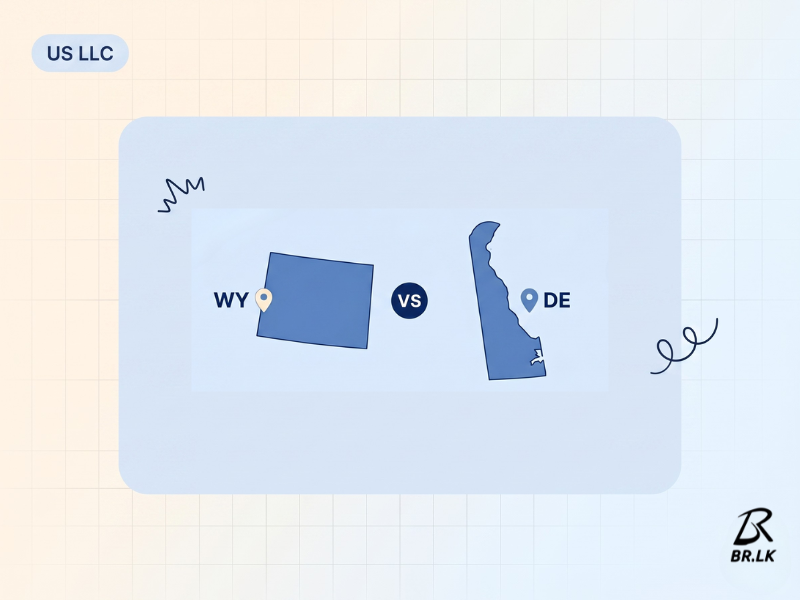
- Wyoming charges around $60 per year for its annual report. The due date falls in the anniversary month of your LLC’s formation, and filing is done online through the Wyoming Secretary of State’s website.
- Delaware requires a minimum franchise tax of $300, due by June 1 each year. Delaware also requires an annual report filed separately. This makes Delaware one of the more expensive states for ongoing compliance.
- New Mexico has no annual report requirement, which is one reason it is popular among international founders. However, you still have all your federal obligations regardless of which state your LLC is formed in.
Missing a state deadline can result in late fees, and if left unresolved, your LLC can lose its good standing status or be administratively dissolved by the state.
3. FinCEN: Beneficial Ownership Information (BOI) Report
As of March 26, 2025, FinCEN issued an interim final rule that removes the BOI reporting requirement for all US-formed domestic companies, including US LLCs owned by foreign nationals. This means that if you formed your LLC in the United States, regardless of whether you are a Sri Lankan or any other foreign national, you are currently exempt from filing a BOI report with FinCEN under the Corporate Transparency Act.
This change reversed the earlier rule that required foreign-owned US LLCs to file within 30 days of formation. The BOI requirement now only applies to foreign entities, meaning companies formed under the law of a foreign country that register to do business in the US.
A US LLC formed by a Sri Lankan founder does not fall into that category.
Important note: FinCEN has stated it intends to issue a final rule later and is accepting public comments. The exemption is currently in place under the interim final rule, but could be revised. Monitor the FinCEN website for any future updates.
4. BEA Surveys: The Layer Most Founders Never Knew Existed
This is the compliance area that almost every guide written for non-resident LLC owners skips entirely, and it is the one most Sri Lankan founders have never heard of. The Bureau of Economic Analysis, or BEA, is a division of the US Department of Commerce. It collects data on foreign direct investment flowing into the United States, and as a Sri Lankan owning a US LLC, you are considered a foreign direct investor.
a. BE-13 Survey: One-Time Filing at Formation
The BE-13 is a mandatory survey that must be filed with the BEA when a foreign person forms or acquires a US business entity where foreign ownership is 10% or more. Since you own 100% of your LLC, this threshold is crossed the moment your company is formed.
This BE-13 is due within 45 days of your LLC’s formation date. It is not an annual filing in most cases, but it is mandatory at the start. The survey collects basic information about your investment: what industry you are in, where the business will operate, and the estimated value of the investment. Filing is done online through the BEA’s website at no cost.
If you believe you do not meet the filing criteria, you are still required to submit a BE-13 Claim for Exemption to formally notify the BEA. Ignoring it entirely is not an option. Penalties for non-compliance range from $4,450 to over $44,539 per violation, with criminal penalties possible in cases of willful non-filing.
b. BE-15 Survey: Annual Reporting
Once your LLC is established and operating, the BEA may require you to file a BE-15 survey on an annual basis. The BE-15 is an annual survey that collects financial and operational data about foreign-owned US businesses. It is separate from the BE-13 and separate from any IRS filing.
Whether you need to file the BE-15 depends on the size and financial activity of your LLC. Smaller LLCs may qualify to file a shorter version or a claim for exemption. The BEA sometimes contacts businesses directly with a notice, but receiving no notice does not mean you are exempt. If your LLC meets the criteria, the obligation exists whether or not you were contacted.
5. Registered Agent Maintenance
Every US LLC is legally required to have a registered agent in the state where it is formed. A registered agent is a person or company with a physical address in that state who is available during business hours to receive legal documents, government notices, and official correspondence on behalf of your LLC.
As a Sri Lankan living outside the US, you cannot serve as your own registered agent. You will need to hire a registered agent service, which typically costs between $50 and $150 per year depending on the provider and the state.
Keeping your registered agent active is not optional. If your registered agent lapses or resigns and you do not replace them, your LLC can lose its good standing with the state. This can also mean that legal notices get missed, which can lead to serious consequences if your LLC is ever involved in a legal matter and you were not aware of it.
6. Bookkeeping and Record-Keeping
Bookkeeping is not just good practice. For a foreign-owned US LLC, it is a compliance requirement. Clean financial records are what make your annual tax filings accurate, and they are what protect you if the IRS ever questions your returns.
The most important habit to build from day one is keeping your business finances completely separate from your personal finances. This means using a dedicated US business bank account for all LLC transactions and never mixing personal and business spending.
At a minimum, your LLC should maintain records of all income and expenses, bank statements, invoices, receipts, and any contracts or agreements the business has entered into. These records should be kept for at least seven years.
For Sri Lankan founders managing everything remotely, tools like Wave, QuickBooks, or Xero make it practical to maintain proper books from anywhere. If your LLC’s finances are straightforward, basic bookkeeping software is often enough. If your transactions are more complex, working with a CPA who handles non-resident LLC accounts is the safer choice.
All Key Deadlines in One Place: 2026 Compliance Calendar
Missing a deadline does not always come with a warning. The IRS, your state, and federal agencies like FinCEN and the BEA all run on their own schedules, and none of them will remind you. The table below gives you every key deadline in one place so you can plan ahead.
| Deadline | Filing | Who It Applies To |
| Within 45 days of formation | BE-13 Survey (BEA) | All foreign-owned LLCs at formation |
| Currently exempt | BOI update (FinCEN) | US-formed LLCs are exempt as of March 26, 2025. Monitor FinCEN for rule changes |
| March 15 | Form 1065 + Schedule K-1 | Multi-member LLCs |
| April 15 | Form 5472 + Pro Forma 1120 | Single-member foreign-owned LLCs |
| June 1 | Delaware franchise tax | Delaware-registered LLCs |
| Varies by state | State annual report | All LLCs, depends on formation state |
| Varies | BE-15 Survey (BEA) | Foreign-owned LLCs meeting BEA criteria |
State-Specific Annual Report Deadlines
State annual report deadlines do not follow a single national schedule. Each state sets its own due date, and in some cases the due date is tied to your LLC’s formation month rather than a fixed calendar date.
| State | Annual Report Due Date | Fee |
| Wyoming | Anniversary month of formation | Around $60 |
| Delaware | June 1 (franchise tax) | $300 minimum |
| New Mexico | No annual report required | No fee |
| Florida | May 1 | $138.75 |
| Texas | May 15 | Varies by revenue |
Extension Options and How to Apply
If you are not ready to file by the deadline, extensions are available for some but not all filings.
- Form 5472 and pro forma 1120: You can request an automatic six-month extension by filing Form 7004 before April 15. This moves your deadline to October 15. Note that an extension gives you more time to file, not more time to pay any tax owed.
- Form 1065: Multi-member LLCs can also file Form 7004 for a six-month extension, moving the March 15 deadline to September 15.
- State annual reports: Extension availability depends on the state. Some states allow it, others do not. Check directly with your formation state’s Secretary of State website for current rules.
- BEA surveys: No extensions are available for these. The 45-day window for the BE-13 is fixed. Plan to file on time from the start. Remember, BOI reporting for US-formed LLCs is currently exempt as of March 2025.
Common Compliance Mistakes Sri Lankan LLC Owners Make
Most compliance failures do not happen because someone was careless. They happen because the information was never there in the first place. These are the mistakes that come up most often among Sri Lankan LLC owners, and knowing them in advance puts you in a much better position.
1. Assuming no US income means no filing requirement
This is the most common mistake, and it is an expensive one. Many Sri Lankan founders believe that if their LLC did not earn any money in the US, there is nothing to file. That is not how the IRS works.
Form 5472 is required based on transactions between you and your LLC, not on whether the business turned a profit. Even transferring your own money into the LLC counts as a reportable transaction. A zero-income year is not a compliance-free year.
2. Never hearing about BE-13 or BE-15 until it is too late
The BEA surveys are almost never mentioned in general LLC formation guides, and most service providers do not bring them up either. As a result, a large number of foreign-owned LLCs are formed without the BE-13 ever being filed.
By the time founders find out it existed, the 45-day window has long passed. The BEA can audit years later, and having no record of a filing or a formal exemption claim leaves you with no defense.
3. Missing Form 5472 thinking it is optional
Because Form 5472 is an information return rather than a tax payment, some founders treat it as less urgent than a standard tax filing. It is not. The IRS imposes a $25,000 penalty per form for late or missing submissions, and that penalty applies even when no tax is owed. There is no scaled penalty based on the size of your LLC or how long you have been operating.
4. Forgetting state annual reports after handling federal filings
Federal and state compliance are completely separate tracks. Completing your IRS filings on time does not mean your state obligations are also covered. Many Sri Lankan LLC owners focus entirely on the federal side and only discover the missed state annual report when their LLC is flagged as not in good standing.
At that point, reinstating the LLC comes with additional fees and paperwork on top of the original report.
5. Not updating registered agent details after changes
If your registered agent changes, or if you switch to a different provider, that update must be filed with your state. Many founders set up a registered agent at formation and never think about it again. If the agent resigns or the service lapses without a replacement being filed, your LLC loses its registered agent on record, which puts it out of compliance with the state immediately.
6. Waiting too long to apply for an ITIN
An ITIN application takes 8 to 12 weeks under normal conditions, and longer during busy tax periods. Sri Lankan founders who wait until they actually need the ITIN, whether for a tax filing, a bank requirement, or a platform verification, often find themselves unable to meet the deadline because the ITIN has not arrived yet. If you think you will need one at any point, apply as early as possible.
How Much Does Annual Compliance Cost in 2026?
One of the first questions Sri Lankan founders ask is how much all of this actually costs per year. The honest answer is: it depends on your state, your LLC structure, and whether you handle filings yourself or hire a professional.
Here is a clear breakdown of every cost you should expect.
Federal Filing Costs: DIY vs Hiring a CPA
Federal filings like Form 5472 and Form 1065 can be handled yourself or through a CPA. DIY filing saves money but carries risk if you are unfamiliar with IRS requirements for non-residents. A CPA who works with foreign-owned LLCs will cost more, but reduces the chance of errors that trigger penalties far larger than the service fee itself.
| Filing | DIY Cost | CPA Cost (Approx.) |
| Form 5472 + Pro Forma 1120 | Free (IRS forms are free) | $200 to $500 |
| Form 1065 + Schedule K-1 | Free | $400 to $800 |
| ITIN Application (W-7) | Free | $100 to $200 |
| BOI Report (FinCEN) | Currently exempt for US-formed LLCs (as of March 2025) | N/A |
| BE-13 Survey (BEA) | Free | $50 to $150 |
| Tax Extension (Form 7004) | Free | Included with CPA package |
State Annual Report Fees by Popular State
| State | Annual Report Fee | Franchise Tax | Total State Cost Per Year |
| Wyoming | Around $60 | None | Around $60 |
| Delaware | $50 (annual report) | $300 minimum | Around $350 |
| New Mexico | None | None | $0 |
| Florida | $138.75 | None | Around $138.75 |
| Texas | None for most small LLCs | Varies | Varies |
Registered Agent Annual Fee
A registered agent service is a recurring cost you cannot avoid as a non-resident. Since you are based in Sri Lanka, you must hire a third-party registered agent in your formation state. Prices vary by provider and state.
| Provider Type | Annual Cost (Approx.) |
| Budget providers | $50 to $100 |
| Mid-range providers | $100 to $150 |
| Premium providers with compliance alerts | $150 to $300 |
Most Sri Lankan founders find a mid-range provider reliable enough for their needs. The key is choosing one that sends renewal reminders and keeps your filing history on record.
Total Estimated Annual Cost for a Typical Sri Lankan LLC Owner
The table below shows a realistic cost estimate for a single-member LLC registered in Wyoming, which is the most popular and cost-efficient state for non-resident founders.
| Cost Item | DIY Estimate | With CPA Estimate |
| Form 5472 + Pro Forma 1120 | $0 | $200 to $500 |
| Wyoming annual report | $60 | $60 |
| Registered agent | $100 | $100 |
| BOI report | Currently exempt (US-formed LLCs) | N/A |
| Bookkeeping tools | $0 to $150 | $0 to $150 |
| Total per year | $160 to $310 | $410 to $960 |
For a Delaware LLC, add at least $300 more per year in franchise tax on top of these figures.
The takeaway here is straightforward. Annual compliance for a Wyoming LLC is manageable in cost, especially when compared to the $25,000 penalty for a single missed Form 5472. Treating compliance as an ongoing business expense from year one is far cheaper than catching up after years of missed filings.
Do You Need a CPA or Can You Handle This Yourself?
This is a question most Sri Lankan LLC owners ask at some point, and the honest answer depends on how complex your situation is and how comfortable you are navigating IRS requirements as a non-resident.
When Self-Filing is Realistic
If your LLC is a single-member Wyoming LLC with straightforward activity, no US-based employees, and clean bookkeeping, handling some filings yourself is possible. The IRS forms are free to access and submit. The BOI report through FinCEN is a simple online process. The BE-13 survey is also filed online at no cost.
For founders who are organized and willing to research each requirement carefully, DIY compliance is manageable at the basic level.
When You Need Professional Help
The moment your situation moves beyond the basics, professional help becomes the safer choice. This includes situations where your LLC has multiple members, where you have income that may be connected to a US trade or business, where you missed filings in a previous year and need to catch up, or where you are unsure whether certain transactions qualify as reportable under Form 5472.
A CPA who works with non-resident LLC owners will not just file your forms. They will review your full situation, identify any filings you may have missed, and make sure your records are clean before submitting anything to the IRS. The cost of a CPA is a fixed, predictable expense. The cost of a missed or incorrect Form 5472 starts at $25,000 and goes up from there.
What to Look for in a Tax Professional
Not every CPA is familiar with non-resident LLC compliance. When choosing one, look for someone who specifically handles foreign-owned US LLCs, who knows Form 5472 and the pro forma 1120 process, and who is aware of BEA reporting requirements. Many Sri Lankan founders make the mistake of hiring a general accountant who is not familiar with the non-resident layer and ends up missing filings anyway.
The short version: if your LLC is simple and you are willing to do the research, you can handle the basics yourself. If there is any complexity at all, work with a professional who knows non-resident compliance specifically.
Ready to Get Your US LLC Annual Compliance Done Right?
Annual compliance for a US LLC is not something you want to figure out under pressure. Between IRS filings, state reports, FinCEN deadlines, and BEA surveys, there are more moving parts than most guides admit, and missing even one of them can cost you far more than the filing itself.
At BR.lk, we help Sri Lankan entrepreneurs not just form their US LLC, but stay fully compliant after formation. From registered agent services and annual report filings to BOI reports and EIN setup, we handle the parts that slow founders down so you can focus on running your business.
Here is why Sri Lankan LLC owners trust BR.lk:
- Full compliance support: We cover registered agent maintenance, annual reports, BOI filings, and more, so nothing falls through the cracks
- Fast and reliable process: Most services are completed within 24 to 48 hours, with clear updates at every step
- Built for Sri Lankan founders: We know the specific challenges non-resident owners from Sri Lanka face, and our services are designed around them
- Responsive local support: Get guidance in a way that is clear and straightforward, without confusing legal jargon
- Trusted by hundreds of Sri Lankan entrepreneurs: From freelancers and agency owners to ecommerce sellers and service providers, founders across Sri Lanka rely on BR.lk to keep their US businesses in good standing
Do not wait until a penalty notice arrives to take compliance seriously. Get your LLC set up and maintained the right way from the start.
Conclusion
Keeping a US LLC compliant is an ongoing responsibility for every Sri Lankan business owner. While the annual requirements may seem overwhelming at first, staying on top of your federal filings, state reports, BOI obligations, registered agent renewals, and record-keeping can help you avoid costly penalties and keep your business in good standing.
The most important thing to remember is that compliance requirements apply even if your LLC made no income during the year. Missing a filing such as Form 5472 or overlooking a state deadline can result in significant fines that are far more expensive than the cost of staying compliant from the start.
By creating a compliance calendar, maintaining accurate records, and seeking professional help when needed, you can confidently manage your US LLC from Sri Lanka and focus on growing your business.
Whether you handle the filings yourself or work with a trusted service provider like BR.lk, making annual compliance a priority will help protect your company, banking relationships, and long-term business goals in 2026 and beyond.
Key Takeaways
- US LLC annual compliance includes federal filings, state reports, registered agent maintenance, and other reporting requirements that must be completed each year.
- Sri Lankan LLC owners must meet additional compliance obligations that do not apply to many US resident business owners.
- Form 5472 and the pro forma Form 1120 are mandatory for most foreign-owned single-member LLCs, even if the business earned no income.
- Multi-member LLCs are generally required to file Form 1065 and provide Schedule K-1 forms to each member.
- State compliance requirements vary, with Wyoming, Delaware, and New Mexico having different annual fees and filing obligations.
- BOI reporting is currently exempt for US-formed LLCs as of March 2025, but the rule may be revised. So, check FinCEN for updates.
- Foreign-owned US LLCs may also have BEA reporting obligations, including the BE-13 and potentially the BE-15 survey.
- Maintaining an active registered agent is essential to keep your LLC in good standing with the state.
- Missing compliance deadlines can result in penalties, loss of good standing, banking issues, and other business complications.
- Treating annual compliance as a regular business expense is far cheaper than dealing with penalties and corrective filings later.
FAQs
Not always. You need an ITIN if you are filing a US tax return, if your LLC withholds taxes on payments, or if a bank or platform requires it. If none of these apply to your situation, an ITIN may not be needed.
Yes. Wyoming requires an annual report filed in your LLC’s formation anniversary month. The fee is around $60 per year, making it one of the most cost-friendly states for non-resident founders.
No, not for US-formed LLCs. As of March 26, 2025, FinCEN issued an interim final rule exempting all US-formed domestic companies, including those owned by foreign nationals like Sri Lankans, from BOI reporting under the Corporate Transparency Act. The requirement now only applies to foreign entities that register to do business in the US. This exemption is currently active but may be revised, so monitor the FinCEN website for any future rule changes.
You must formally dissolve the LLC with your formation state and settle any outstanding filings or fees. Simply stopping operations is not enough. Unfiled compliance obligations continue to accumulate until the LLC is officially dissolved.
Yes. There is no citizenship or residency requirement to own a US LLC. Sri Lankans can form and operate a US LLC entirely remotely without visiting the United States.
It depends on whether your LLC has income effectively connected to a US trade or business. Many non-resident owners with no US-based operations owe no US income tax, but federal filing obligations like Form 5472 still apply.
You do not need an EIN to form the LLC, but you need one to open a US bank account, hire employees, and file taxes. Non-residents cannot apply online and must apply by fax or mail using Form SS-4.
An EIN identifies your business for tax purposes. An ITIN identifies you as an individual taxpayer when you have no SSN. An SSN is only issued to US citizens and authorized residents. As a Sri Lankan founder, you will work with an EIN and possibly an ITIN.
No. You can form, manage, and stay compliant with a US LLC entirely from Sri Lanka. Formation, EIN applications, annual filings, and registered agent services can all be handled remotely.
Wyoming is the most practical choice for most Sri Lankan founders. It has low annual fees, no state income tax, strong privacy protections, and straightforward compliance requirements compared to states like Delaware or Florida.